Running slower, getting faster
MAF training theory says run slow enough and your easy pace gets faster. I already had the heart rate data. I just needed to look at it differently.
The Maffetone Method has one central claim: train at the right heart rate consistently, and your easy pace will quietly get faster over months. You don’t chase speed. You let the aerobic base build, and speed comes as a side effect.
I wasn’t doing formal MAF training. But reading about it left a question I couldn’t shake: I already have heart rate data for every run. Could I see this same signal in my own numbers, from a different angle?
A different angle on the same idea
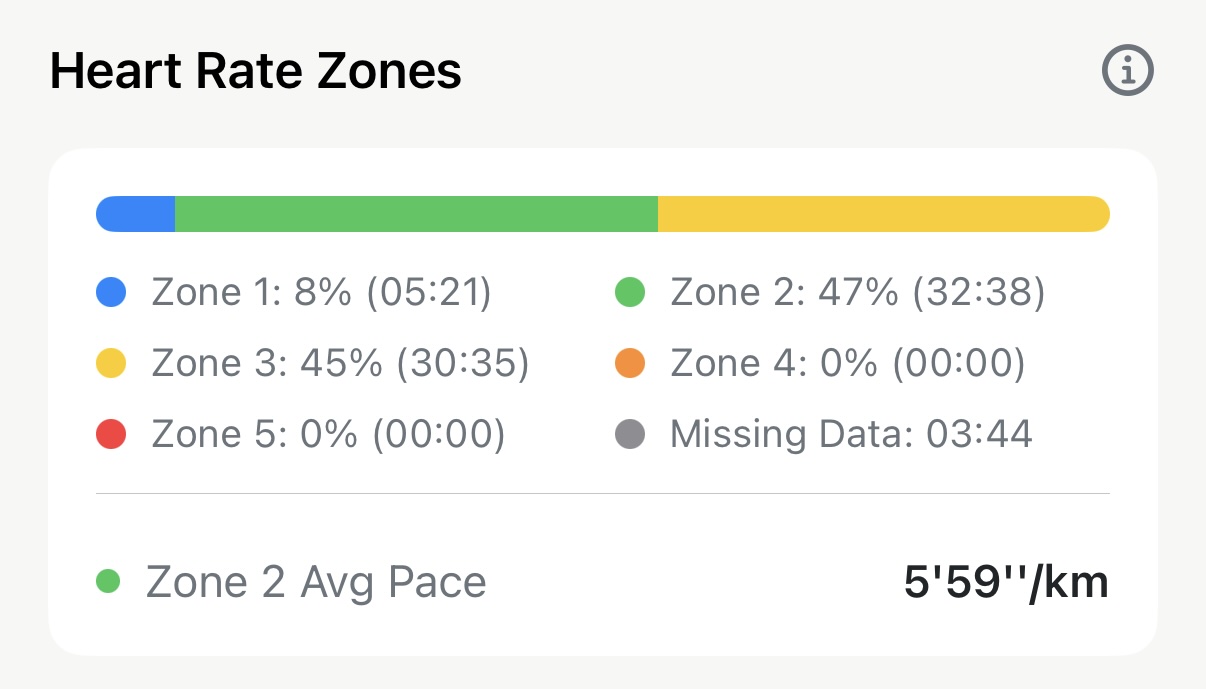
The Zone 2 Average Pace is simple: the time-weighted average pace during the minutes of a run where your heart rate was in Zone 2 — between 73 and 80 percent of max, by default. It’s not a strict MAF pace. You’d need a dedicated test protocol for that. But it’s watching the same thing: what does your aerobic effort actually cost you, in terms of pace, right now?
The number lives at the bottom of the Heart Rate Zones card on each run.
Six months of easy runs
When I looked at the trend, my Zone 2 pace was faster than it was six months ago. Not dramatically — but measurably. The aerobic work had added up quietly, in the background, across runs I hadn’t thought of as training.
That’s the thing about slow running. You don’t feel it happening. You just eventually notice it did.